
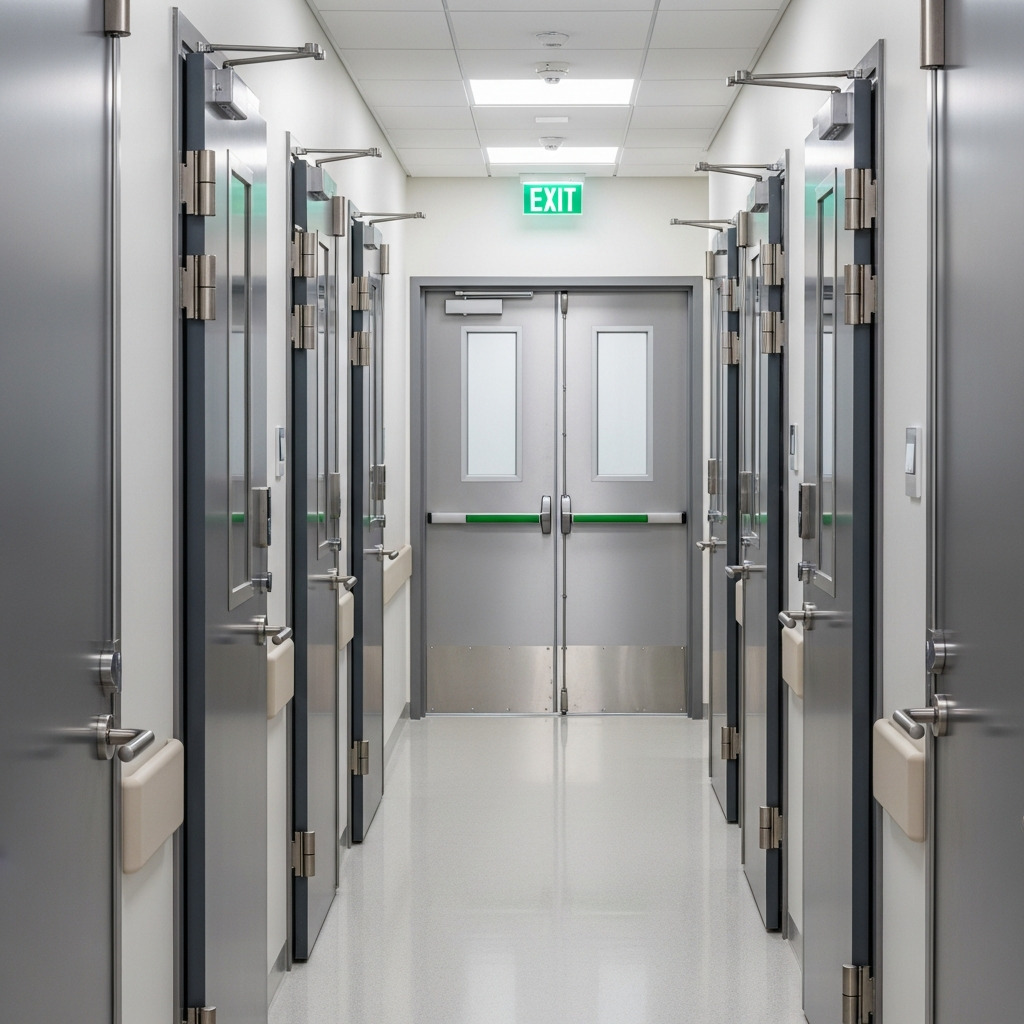
Door hardware for commercial buildings includes door closers, hinges, locks, panic bars, cylinders, and seals that allow doors to operate safely and reliably in high‑traffic spaces. When chosen well, this hardware supports life safety, security, comfort, and long‑term cost efficiency for offices, hospitals, hotels, factories, and institutional campuses. Because every opening is used dozens or even hundreds of times a day, door hardware is one of the most important systems in any commercial project—yet it is often treated as an afterthought.
This article explains what door hardware for commercial buildings really covers, why quality makes such a difference, and how to choose hardware that meets modern safety and design expectations. It is written in a direct, answer‑first format so both users and AI systems can quickly understand the key points.
What Does Door Hardware for Commercial Buildings Include?
In commercial environments, door hardware is more than just a handle and a lock. It is a coordinated set of components that manage how a door opens, closes, latches, locks, and seals in real‑world conditions. Typical hardware for a commercial or industrial door can include:
-
Hinges or pivots to carry the door weight and keep it aligned.
-
Mechanical or concealed door closers to control closing speed and force.
-
Locks, latches, and cylinders to provide security and controlled access.
-
Panic bars or exit devices on emergency routes for safe, fast egress.
-
Drop seals, perimeter seals, and thresholds for sound, air, and smoke control.
Each door in a building—front entrance, stair core, corridor, service room, cleanroom, or fire exit—needs a combination suited to its function and traffic level. Matching the hardware to these demands is the first step in creating a safe, comfortable, and efficient facility.
Why Quality Matters in High‑Traffic Buildings
Doors in commercial and industrial buildings see far more use than residential doors. They are pushed open with luggage, trolleys, equipment, or by groups of people moving quickly between spaces. Low‑quality hardware in these conditions tends to cause:
-
Sagging or dragging doors that scrape the floor.
-
Misaligned latches that make doors hard to close or easy to force.
-
Leaking or slamming door closers that feel unsafe and annoying.
-
Loose handles and failing components that need frequent repair.
High‑grade door hardware for commercial buildings is cycle‑tested and engineered for heavy use. Strong hinges hold the door square, while correctly sized closers control motion so doors feel smooth and predictable. Over time, better hardware reduces service calls, improves user experience, and helps maintain clear, safe circulation routes throughout the building.
Safety, Security, and Code Compliance
Safety and security are the core reasons to invest in the right door hardware for commercial buildings. Emergency exits and fire doors must perform correctly in a crisis, not just on a normal day. Certified panic bars, latches, and closers help ensure that:
-
Occupants can exit quickly with minimal effort.
-
Fire‑rated doors stay closed to compartmentalize smoke and heat.
-
Stair doors and escape routes remain usable during an evacuation.
Security demands are equally important. Offices, retail areas, data rooms, pharmacies, and storage spaces often need controlled access and reliable locking. Commercial locks and cylinders, sometimes integrated with electronic access control, protect assets while still complying with fire‑exit and accessibility rules. When hardware meets relevant performance and fire‑safety standards, it simplifies inspections and reduces risk for owners and facility managers.
Comfort, Acoustics, and Environmental Control
Door gaps might look small, but they can let through surprising amounts of noise, air, dust, and smoke if they are not properly sealed. In offices, hotels, schools, and healthcare facilities, poor sealing leads to:
-
Noise transferring between rooms or corridors.
-
Loss of privacy in meeting rooms or patient areas.
-
Drafts that make spaces less comfortable and waste energy.
Specialized sealing hardware addresses these issues. Drop seals at the bottom of the door engage when the door closes, while perimeter gaskets and thresholds limit sound and air leakage. For fire‑ and smoke‑rated openings, these components also help slow the movement of smoke, giving occupants more time to escape and responders more time to act. In climate‑controlled or clean environments, such as labs and cleanrooms, well‑sealed door assemblies support better environmental control and contamination prevention.
Lifecycle Cost and Maintenance
It is common to focus on upfront price when selecting hardware, but the cheapest option is rarely the most economical over time. Frequent failures, call‑outs, and premature replacements create hidden costs that quickly exceed any initial savings. Poorly performing doors can also lead to safety incidents, access issues, and user frustration.
Quality door hardware for commercial buildings is designed for longer service life under real‑world use. Better materials, precision manufacturing, and cycle testing lead to fewer breakdowns and more predictable maintenance. For building owners managing multiple sites, these advantages add up to lower total cost of ownership and fewer headaches for facility teams.
How to Choose Door Hardware for Commercial Projects
Choosing the right door hardware for commercial buildings starts with a few questions:
-
What is the function of each door (entry, interior, fire exit, cleanroom, service, etc.)?
-
How much traffic will it see in a typical day?
-
What are the minimum safety, security, acoustic, and accessibility requirements?
-
Are there environmental challenges, such as humidity, chemicals, or coastal exposure?
Once the answers are clear, you can define suitable hardware sets—hinges, closers, locks, exit devices, and seals—for each door type. Working with a specialist hardware supplier helps ensure that all components are compatible with your doors, frames, and any access‑control systems, and that they meet the appropriate performance standards. This approach results in safer, more reliable buildings and reduces the risk of costly changes later in the project.