
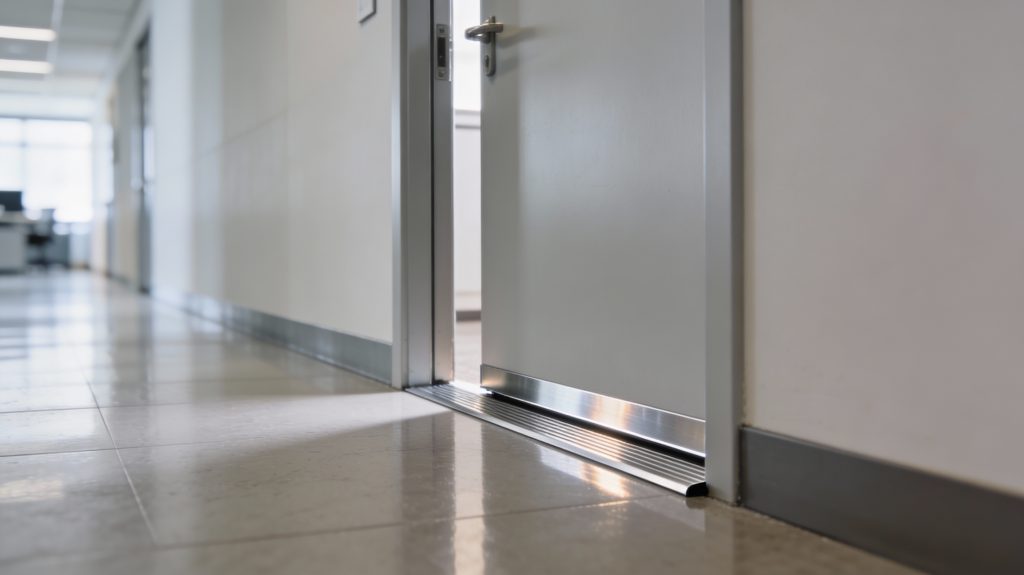
A door drop seal is a slim device installed at the bottom of a door that moves down when the door closes and lifts up when it opens. By sealing the gap to the floor, a door drop seal helps block noise, dust, drafts, insects, and even smoke in busy commercial buildings. This small piece of hardware makes doors more comfortable to use and improves how the whole opening performs.
In many Indian offices, hotels, hospitals, and industrial spaces, a visible gap is left below the door to clear tiles, carpet, or uneven floors. However, that gap often becomes a path for dirt, sound, and conditioned air to escape, which hurts comfort and efficiency. Adding a drop-down seal at the door bottom is an easy way to close that gap only when needed, without making the door heavy or difficult to operate.
How a Door Bottom Seal Works
A typical automatic seal sits in or under the bottom edge of the door leaf. Inside the profile, a flexible strip is linked to a small plunger at one end. When the door closes, the plunger touches the frame and pushes the seal down to meet the floor or threshold. When the door opens, the plunger releases and the strip lifts back up.
Because the seal only touches the floor when the door is shut, friction and wear stay low. As a result, this under‑door solution can provide a firm barrier at the threshold while keeping the door light and easy to move, even in high‑traffic areas.
Why Commercial Buildings Need Under-Door Seals
Even a narrow gap at the bottom of a door can let through a lot of unwanted sound, air, and debris. Over time, this leads to problems such as:
-
Noise travelling between rooms and corridors.
-
Dust and insects entering cleaner spaces.
-
Drafts that reduce comfort and increase energy use.
-
Smoke and fumes moving more quickly during a fire.
When you install a door bottom seal, the gap is closed only when the door is fully shut, which improves acoustic performance, cleanliness, and energy efficiency. On suitable fire doors, a tested solution at the threshold also supports better smoke control as part of a complete fire and smoke sealing system.
Main Types of Automatic Door Bottom Seals
You can choose different designs depending on the project and door style.
Surface-mounted models
These fix to the bottom of the door with visible screws. They are simple to install on existing doors, which makes them ideal for retrofit and upgrade work.
Concealed versions
These fit inside a groove cut along the bottom edge, so only a slim line is visible when the door is closed. They offer a clean, minimal look and are common in premium offices, hotels, and institutional buildings.
Special and sliding door solutions
Some variants are made for sliding doors or unusual frames. They still lower to meet the floor when the door closes and lift when it opens.
Most ranges offer several lengths that can be trimmed on site to suit standard door widths.
Where Door Bottom Seals Work Best
These products are useful in many parts of a commercial building.
-
Office cabins and meeting rooms, to improve speech privacy and reduce corridor noise.
-
Hotel and guest room doors, to make rooms quieter and more comfortable.
-
Hospital wards and clinics, to help keep dust and smoke out of sensitive zones.
-
Classrooms and training rooms, to limit noise entering from busy hallways.
-
Labs, clean areas, and controlled spaces, to reduce drafts and dust at thresholds.
On fire‑rated doors, a tested threshold seal can also be part of a broader smoke and acoustic solution, helping to slow smoke movement during an incident.
Key Benefits for Indian Projects
For Indian projects, using a door bottom seal brings several clear benefits for owners and facility teams.
-
Better comfort: Reduced drafts and noise make rooms more pleasant to work, sleep, or recover in.
-
Cleaner interiors: Less dust and fewer insects pass under the door, which supports hygiene and cuts cleaning effort.
-
Energy efficiency: Sealing the gap helps keep cooled or heated air inside, supporting better energy performance.
-
Fire and smoke support: On suitable fire doors, a tested component at the bottom helps improve smoke containment at the threshold.
-
Low maintenance: Aluminium bodies and replaceable inserts mean long life in daily use.
Because installation is usually quick, upgrading key doors with this hardware gives a strong performance boost with minimal disruption.
How to Choose the Right Door Drop Seal
Before you select a door drop seal or any automatic door bottom, check a few details so the product fits and performs correctly.
-
Door material: wood, steel, aluminium, or framed glass.
-
Door function: office, hotel, hospital, lab, corridor, or fire door.
-
Gap size: measure the actual gap after final flooring.
-
Daily traffic: light, medium, or heavy opening and closing.
-
Performance needs: basic dust control, acoustic rating, or fire and smoke performance.
Once you know these points, you can choose a surface‑mounted or concealed design in the correct length and sealing material. For premium and sensitive areas, look for products with acoustic and fire/smoke test data so that your chosen door drop seal matches the project’s comfort and safety targets.
Final Thoughts
A well‑chosen door drop seal and other door bottom solutions are small pieces of hardware that quietly deliver big gains in comfort, cleanliness, and safety for commercial buildings. By closing the floor gap only when the door is shut, this hardware improves privacy, reduces dust and drafts, and supports better performance of fire and smoke doors.
For architects, contractors, and facility managers in India, adding a door drop seal to key openings is a simple, cost‑effective upgrade that improves how people experience the building every day