
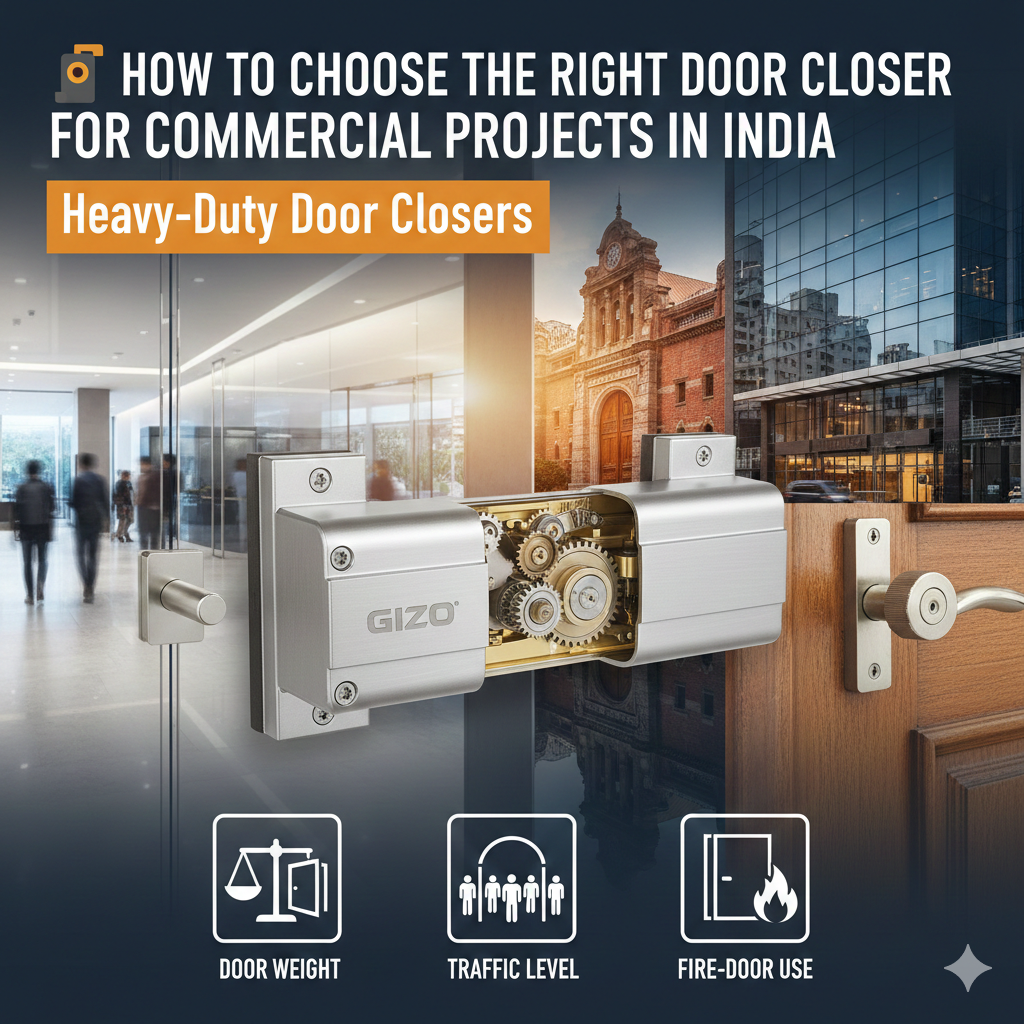
Heavy-duty door closers are essential for commercial buildings in India because they keep doors safe, smooth, and reliable. When the closer is too weak, doors slam, leak oil, or do not close properly, which can damage the door and create safety risks. By choosing the right heavy-duty door closers, you improve safety, reduce repairs, and keep your building compliant with fire rules.
In this simple guide, you will see how to pick heavy-duty door closers based on door weight, daily traffic, and fire rating. You will also understand why a strong hydraulic closer, such as models from Gizo, is a smarter long-term choice than cheaper, light-duty options.
Light, Medium, and Heavy-Duty Closers: The Basics
First, it helps to know the basic types of door closers. Most brands group them as light-duty, medium-duty, and heavy-duty, based on closing power and how many times they can open and close during testing.
-
Light-duty closers
These are used on light internal doors, such as small offices or store rooms. They handle low traffic and are usually not suitable for heavy doors or busy corridors. -
Medium-duty closers
These work on average-weight doors in places like clinics or normal office rooms. They take moderate traffic but may still wear out too fast on main entrances or school corridors. -
Heavy-duty door closers
These are designed for heavy doors in high-traffic areas such as malls, hospitals, schools, and main building entries. They are cycle-tested for many more openings and are usually the right choice for commercial fire doors.
Because of this, heavy-duty door closers are the safest option wherever the door is heavy, busy, or part of an important escape route.
1. Check Door Weight and Size
To start, always check the door’s weight and width. Every closer has a power size (for example EN 3, EN 4, EN 5, EN 6) that tells you how strong it is and how large a door it can control.
For many Indian commercial doors, especially metal or solid timber doors, you will often need EN 4, EN 5, or EN 6 heavy-duty door closers. If you use a small, light-duty closer on a heavy door, it will be forced to work harder than it was designed for. As a result, the seals and oil can fail early, and the closer may leak or lose power.
2. Think About Daily Traffic
Next, consider how many times the door opens and closes each day. This traffic level has a big impact on how long a closer will last.
For example:
-
A rarely used store room might only open a few times per day.
-
A hospital corridor door or mall entry could open hundreds of times per day.
Heavy-duty door closers are tested to very high cycle counts to handle this kind of heavy use. Some are tested for 500,000 cycles or more. Because of this, heavy-duty models are the right choice for busy public areas, main doors, and any door that many people use throughout the day.
3. Fire Doors: Safety Comes First
Fire doors need special care. In India, the National Building Code (NBC 2016) and related standards explain how fire doors and their hardware must perform. For any fire-rated door, the closer must:
-
Make sure the door closes by itself and latches properly.
-
Be part of a tested and certified fire door assembly.
If you put a non-certified closer on a fire door, you risk lives and break the rules. For staircases, corridors, and escape routes, always choose heavy-duty door closers with valid fire test certificates that match your door’s fire rating.
How Heavy-Duty Door Closers Reduce Maintenance
Now that you understand the basics, it is easier to see why heavy-duty door closers are better for long-term performance. When the closer is strong enough and well-designed, it needs fewer adjustments and fewer emergency repairs.
Strong Body and Tested Parts
Good heavy-duty door closer usually use an aluminum or alloy body with tough internal parts. These materials help the closer survive constant use and minor impacts without bending or wearing out too fast.
Because many heavy-duty door closers are cycle-tested to high levels, they offer more predictable performance over several years. This means facility teams spend less time replacing units that have failed early.
Smooth Hydraulic Control
Another key part of heavy-duty door closers is the hydraulic system. High-quality hydraulic oil and precise valves keep the closing motion stable even when temperatures change between seasons.
Most good closers allow you to set:
-
The closing speed from fully open to almost closed.
-
The latching speed in the last part of the swing, so the door does not slam but still latches firmly.
This control is especially useful on fire doors and main entries, where a secure latch and calm, quiet action are both important.
Fewer Callbacks, Lower Costs
Because heavy-duty door closer are matched to door weight, traffic, and fire rating, they tend to stay stable for longer. As a result, you get fewer complaints about slamming doors, fewer leaks, and fewer urgent repair calls.
Over the life of a building, the extra strength and stability of heavy-duty door closers usually save money compared to repeatedly fixing or replacing cheaper, under-sized models.
Quick Checklist Before You Buy
Before you order heavy-duty door closer for your next Indian project, use this quick checklist:
-
Does the closer power size match the real door weight and width?
-
Is the closer tested for high traffic and many cycles?
-
For fire doors, does it have the correct fire test and rating as per NBC and related standards?
-
Can you adjust both closing and latching speed to suit your site conditions?
If the answer is yes to all of these, you are much more likely to enjoy safe doors, smooth operation, and fewer maintenance problems with your heavy-duty door closer